Emergency Medical Insurance for Visitors to Canada 2026: What is Covered and What is Not
Canada's public healthcare system does not cover visitors. A short ambulance ride costs hundreds of dollars. One night in a Canadian hospital can cost several thousand. A serious surgery or extended ICU stay can run into the tens of thousands. Emergency medical insurance for visitors absorbs these costs so a sudden illness or accident does not become a long-lasting financial burden.
This 2026 guide breaks down exactly what is covered, what is not, and how to file a claim if something happens. We compare the five Canadian insurers featured on DaddySafe Visitors to Canada: Manulife, GMS, 21st Century, Destination Canada, and the RIMI Standard Plan.
What emergency medical insurance covers
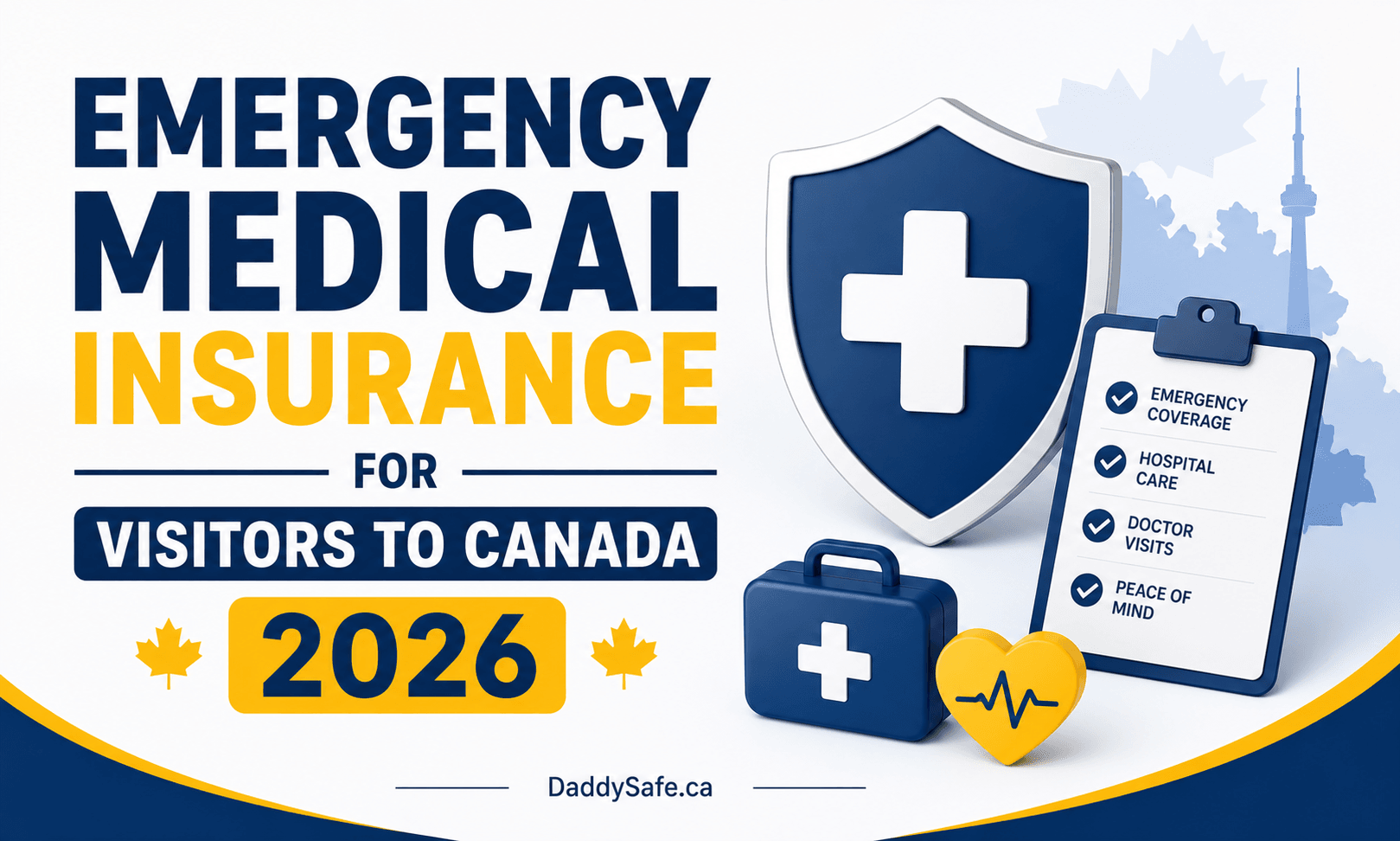
Most quality visitor insurance plans cover the following when an emergency happens:
Doctor visits for sudden illness or injury
Walk-in clinic and urgent care visits
Hospitalization, including room and board
Surgery, including operating room and anesthesia
Intensive care and specialized medical care
Ambulance services by ground or, when needed, by air
Emergency prescription drugs related to the covered condition
Diagnostic tests such as X-rays, MRIs, ultrasounds, and lab work
Emergency dental care for accidental injury or sudden pain relief, up to a limit
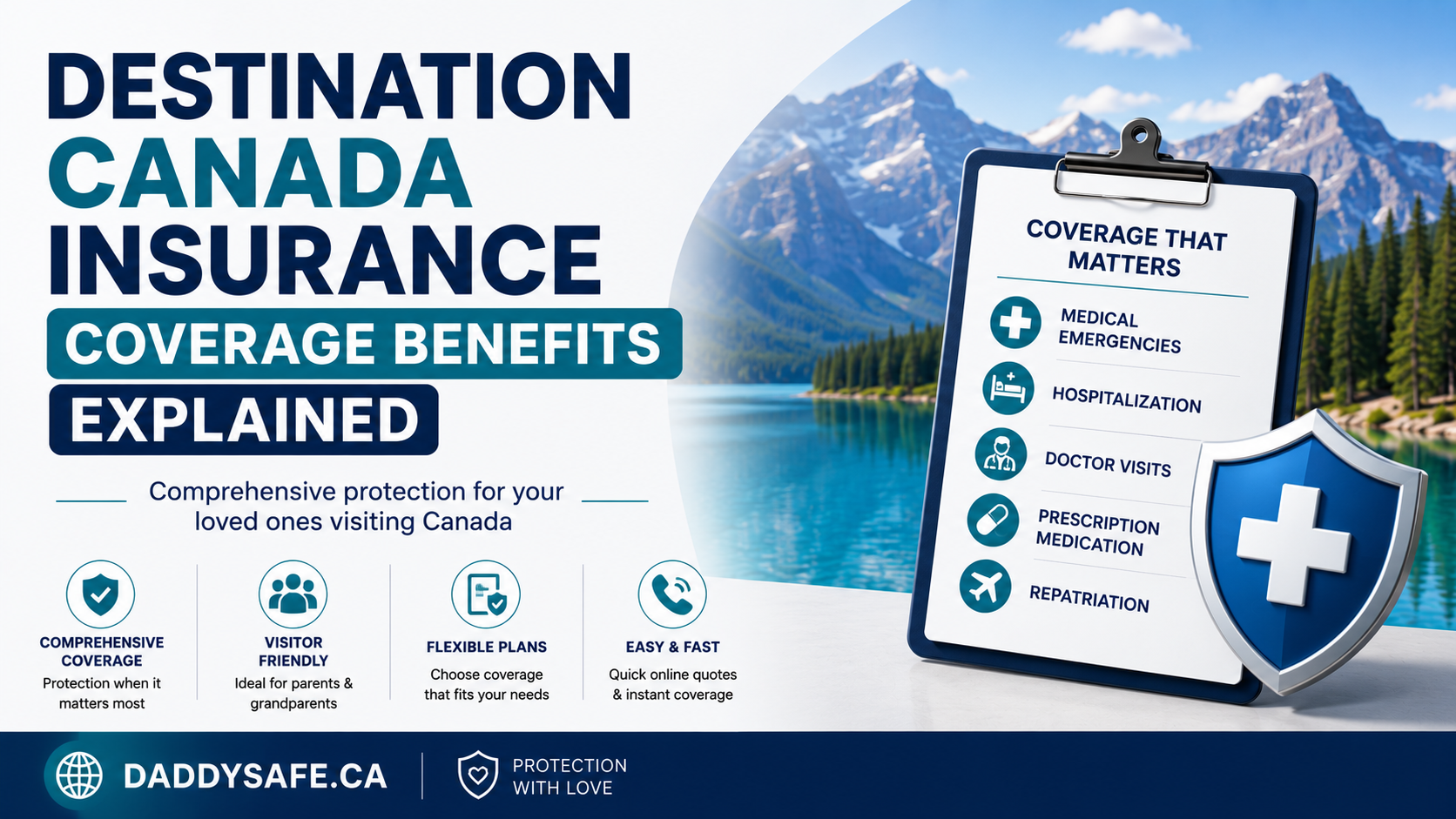
Repatriation back to the home country if medically necessary
Return of mortal remains in the unfortunate event of death
Higher-tier plans often add follow-up visits, paramedical services, and accidental death benefits.
What emergency actually means
Insurance treats emergency as a sudden, unexpected medical event that requires immediate care. It does not mean routine appointments, planned procedures, or ongoing management of a known condition. Once a condition is stabilized, ongoing care typically falls outside emergency coverage.
What is usually not covered
Understanding exclusions is just as important as understanding coverage. Most plans do not pay for:
Routine checkups, vaccinations, or general physicals
Cosmetic procedures and elective surgery
Pregnancy and childbirth (some plans add limited maternity riders)
Mental health treatment beyond the initial emergency stabilization
Substance abuse and addiction-related treatment
Self-inflicted injury
Injuries from professional or high-risk sports occur unless a rider is added
Pre-existing conditions, unless they are stable, and a rider is included
Reading the policy wording is the only reliable way to know exactly what your plan does and does not cover.
How the 5 IRCC-aligned insurers compare
Manulife CoverMe - broadest emergency coverage with strong, stable pre-existing condition handling.
GMS Immigrants and Visitors - competitive pricing for healthy visitors, clear emergency definitions.
21st Century Travel - flexible deductible options to lower the premium without sacrificing emergency limits.
Destination Canada - strong all-rounder, particularly good value for older visitors.
RIMI Standard Plan - clean, predictable claim handling and clear policy wording.
Pre-existing conditions explained simply
A pre-existing condition is any health issue the visitor has been diagnosed with, treated for, or taken medication for which before the policy effective date. Insurers require the condition to be stable, meaning no changes in symptoms, treatment, or medication, for a defined stability period, often 90 to 180 days. Some plans automatically include stable pre-existing conditions, others require an optional rider. If the visitor has any health conditions, ask this question first when shopping. See our deeper guide: Visitor Insurance with Pre-Existing Conditions: 2026 Coverage Guide.
How to file a claim if something happens
Call the insurer 24/7 emergency assistance line as soon as possible, ideally before treatment begins. Direct billing to the hospital may be possible.
Get treatment at the nearest hospital, urgent care, or clinic. Keep all receipts and original documents.
Collect documentation: medical reports, doctor notes, prescription receipts, ambulance bills, and a copy of the visitor passport and policy.
Submit the claim through the insurer online portal or mail. Most insurers reimburse within 4 to 8 weeks of complete documentation.
Keep copies of everything you send for your records.
The smoother your documentation, the smoother the payout. Many claim delays are caused by missing receipts or incomplete reports.
Tips for getting the most from your policy
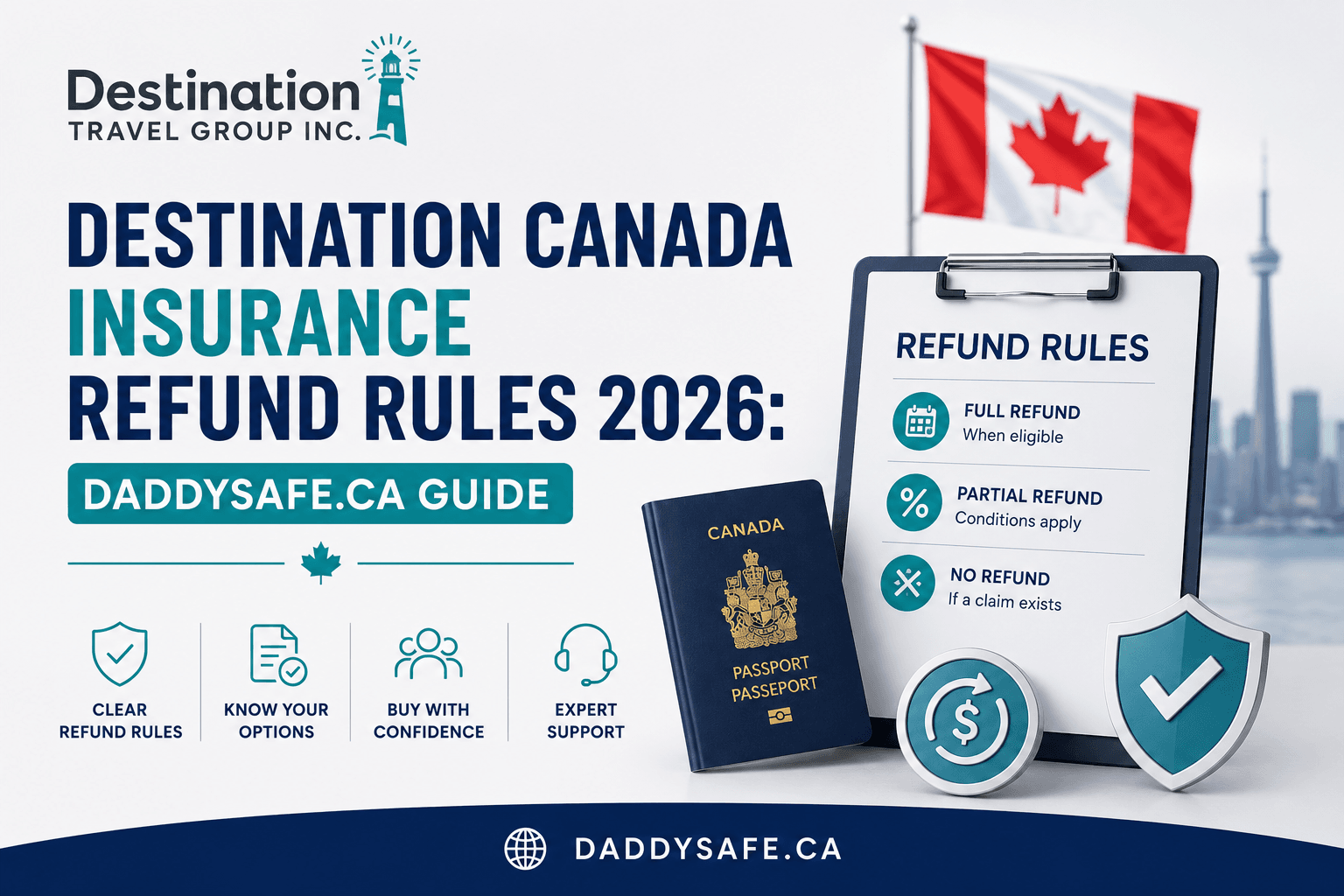
Read the policy wording within the free-look period (usually 10 days after purchase). You can cancel for a full refund if it does not meet your needs.
Save the insurer emergency phone number in the visitor's phone.
Keep a digital copy of the policy in cloud storage and a printed copy in their travel documents.
Always call for assistance before non-life-threatening treatment when possible.
Compare emergency medical insurance now
Compare Manulife, GMS, 21st Century, Destination Canada and RIMI Standard Plan in 60 seconds. Instant quote, IRCC-aligned coverage, full refund on visa refusal.
Related reading on DaddySafe: Best Visitor Insurance Plans in Canada 2026: Top 5 Insurers Compared | Visitor Insurance for Parents Visiting Canada: 2026 Buyer's Guide | Visitor Insurance with Pre-Existing Conditions: 2026 Coverage Guide
Related Blogs